

Most stain advice treats home washing as a safe first move, worst case, the stain just stays. That holds for many spills, but not for the seven types below. Running them through a washer and dryer doesn't just fail to help. It locks in the stain, sometimes for good. Heat sets certain stains the way it sets dye, and water spreads others wide before they have a chance to lift.
So is dry cleaning better for removing stains naturally than a home wash? For these seven, yes, and the reasons are chemical, not habit. Each section below breaks down what actually goes on in the fabric and what to do the moment it hits, before a home wash decides for you.
Oil and Grease Stains
Cooking oil, butter, salad dressing, motor oil, hand lotion. None of them responds to water.
Water and oil repel each other. That's why home detergent struggles here: it breaks down some of the oil, rarely all of it. Then the dryer's heat bakes in what's left, making the stain far harder to lift afterwards.
Dry cleaning skips water for solvents, which dissolve oil directly. That's the real answer to the question of whether or not dry cleaning can remove stains naturally: the method matches the chemistry.
What to Do the Moment It Happens
- Blot with a dry cloth. Don't rub, don't add water.
- Skip the stain stick and the pretreatment spray. Both are water-based and won't touch oil.
- Keep the garment away from any heat source, including a warm car dashboard, until it's been professionally treated.
- Take it in within a day if at all possible.
Red Wine on Light or Delicate Fabrics
Red wine earns the panic. Its tannins oxidize fast, often within hours of hitting fabric. Once oxidized, they bond deeper into the fiber and darken. Home detergent isn't built to break that bond, and scrubbing (the instinct) just spreads the stain into a wider ring.
Why Blotting Beats Every Home Remedy You've Heard
Club soda, salt, white wine poured over red wine: none of these is grounded in anything that actually breaks down tannins. At best, they dilute the stain temporarily. At worst, the extra liquid pushes the wine deeper into the weave.
- Blot from the outside of the stain inward. This keeps it from spreading.
- Don't apply water or any home remedy. Dilution isn't removal.
- Never put a wine stained garment into the dryer. Heat sets tannins the same way it sets oil.
- Get it to a cleaner within 24 hours for the best odds.
Ink: Ballpoint, Gel, and Permanent Marker
A pen exploding in a pocket, a marker cap left off near a school bag: both are harder to fix than people expect.
Most ink is alcohol-based or solvent-based, so water spreads it instead of dissolving it. A permanent marker is built to resist water, which is why it survives a normal wash intact. Home ink remover products often strip dye along with the ink, trading one problem for another.
Ballpoint vs. Permanent Marker: Why the Difference Matters
Ballpoint and gel ink are typically dye-based and slightly more responsive to targeted treatment. Permanent marker is pigment-based and bonds to the fiber on contact, which is why it needs a different chemical approach entirely.
- Don't rub the stain. This drives ink deeper and widens the mark.
- Skip hairspray and rubbing alcohol. Both are inconsistent and can damage colored or delicate fabric.
- Note the kind of ink (pen brand, marker type) before you take it in. It helps the cleaner choose the right compound.
Dry cleaning has access to specialty ink removal compounds built to target the ink without stripping the dye underneath, something a home remover simply isn't formulated to do.
Lipstick and Oil-Based Makeup
Collars and cuffs take the brunt of this one. Lipstick and foundation share a structure: wax and oil carrying pigment.
Water can't dissolve either, so a home wash just moves the stain around. Rubbing pushes pigment deeper instead of lifting it, and the dryer sets both the oil and the pigment for good.
The Fabrics Most at Risk
Silk and other delicate weaves absorb oil-based stains faster than cotton or synthetic blends, because the fibers are more porous. A lipstick smear on a silk blouse needs faster attention than the same smear on a cotton T-shirt.
- Blot off excess product immediately. Don't smear it.
- Leave the garment folded so the stain doesn't transfer to another part of the fabric.
- Avoid any home stain pen. Most are water-based and won't touch the oil component.
Can stains be removed by dry cleaning naturally in cases like this? Yes, because professional cleaning treats the oil and the pigment as two separate problems, using solvent for one and targeted spotting for the other.
Blood, Especially Once It's Already Set
Blood is a protein stain, and protein stains follow their own rules. Fresh blood in cold water sometimes lifts on its own, which is where the “just rinse it” advice originates. The problem is timing.
A warm wash or the dryer denatures the proteins before they're fully treated, and once that happens, they bond permanently with the fabric. Most people don't catch the stain in time, or toss it in with a regular warm load without thinking.
The Cold Water Myth (And Where It Falls Apart)
Cold water rinsing genuinely does work, but only within a narrow window and only if no heat touches the stain afterwards. One warm wash, one trip through the dryer, and that window closes for good.
- Rinse gently in cold water only if you can do it immediately.
- Never use hot water on a blood stain, even to help the process.
- If the item has already been through a warm wash or dryer cycle, stop trying to treat it at home. Take it in.
Professional cleaners use enzyme pretreatments built specifically to break down set proteins, something no home detergent is formulated to do once the stain has bonded.
Coffee and Tea on Silk, Wool, or Other Protein Fibers
Coffee and tea are tannin-heavy, similar to red wine, but the fabric they land on changes the outcome completely.
On silk or wool, the tannins bond aggressively with the protein structure of the fiber itself. Adding water at home, which is unavoidable in a normal wash, swells those protein fibers and drives the tannins in deeper rather than washing them out.
When Coffee and Tea Actually Are DIY Safe
This is the one stain on this list where fabric type changes the answer. On cotton or polyester, a fresh coffee or tea stain often responds fine to a quick cold rinse and standard detergent, because those fibers don't have the same protein structure.
- On silk, wool, cashmere, or other protein fibers: always professional, no exceptions.
- On cotton or polyester: a fast rinse can work, but check the care label first.
- When in doubt about the fabric: treat it like silk. Being overly cautious costs less than being wrong.
Yellow Sweat Stains on Collars and Underarms
This one surprises most people. Yellow underarm and collar stains aren't sweat. They're a slow chemical reaction between body proteins, antiperspirant's aluminum compounds, and the fabric, building up over repeated wears.
It's a chemical bond, not surface residue, so standard detergent can't touch it. That's why the stain keeps reappearing even when the shirt looks clean otherwise.
Why Bleach Makes This One Worse, Not Better
Bleach lightens the tint, but it also weakens the fiber right where it's already compromised. Over time, bleached collars thin out and tear faster than the rest of the shirt.
- Skip bleach. It masks the color, not the bond.
- Rotate antiperspirants or ease up on reapplication if this keeps happening on the same shirts.
- Bring in recurring stains early, before they build up over months.
Professional treatment uses targeted enzymes and oxidizers to break the bond without weakening the fabric like bleach.
Already Washed the Stain? Here's What to Do Now
If you're reading this after the fact, after the stain already went through a home wash or a dryer cycle, don't assume it's a lost cause. Take the garment to dry cleaning anyway.
Professional cleaners see set-in stains constantly, and a fresh stain has the best odds. What matters now is what you do next.
- Don't wash it again. A second home wash cycle only sets the stain further.
- Don't try a stronger home remedy to fix the first attempt. Layering treatments often makes removal harder.
- Point out exactly what caused the stain and roughly when the wash happened. That timeline helps a professional choose the right treatment.
- Take it in as soon as you notice it's still there, rather than waiting to see if it fades with wear.
Dry cleaning gives that stain its best remaining shot, and it's always a better move than another round of home remedies.
The First 24 Hours Decide Everything
Across all seven stain types above, timing is the single biggest factor in whether or not a stain comes out. A fresh stain taken straight to a professional cleaner has roughly a 60 to 90 percent removal rate. Run that same stain through a home wash and dryer cycle first, and the odds fall sharply, sometimes as low as 10 to 40 percent.
The gap isn't about which cleaner you use. It's about what happens to the stain chemically in those first hours.
A Quick Triage Checklist for Any Stain
- Blot, don't rub, regardless of what caused the stain.
- Skip water unless you're certain the stain type responds to it (see coffee and tea above).
- Never apply heat – no dryer, no iron, no hot water – until the stain has been professionally assessed.
- When you're not sure what category a stain falls into, treat it as urgent and take it in rather than experimenting.
Before You Try Another Stain Remover, Take It to Azalea Cleaners
If you're standing over one of these seven stains right now, don't reach for another home remedy. Every hour you wait changes the odds, and we'd rather see the garment before that window closes with proper dry cleaning.
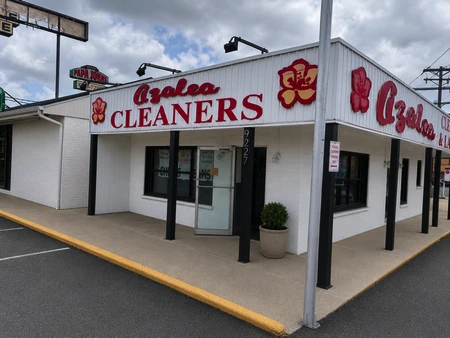
At Azalea Cleaners, we've been doing this in Shreveport since 1958, and every piece that comes through our doors is hand-finished and pressed with the same attention, stain or no stain. We pair that hands-on dry cleaning process with Presso cleaning technology and transparent pricing, so you know what you're getting before we start.
New here? Take 20% off your first order and let us show you what careful handling actually looks like.
Address: 732 Azalea Dr., South Highlands, Shreveport, LA
Phone: +1 318-861-0557
Email:azaleacleaners@yahoo.com
Job interview next month. Wedding in the spring. A promotion that means more client meetings. There's always a reason a suit needs to work, and the time to fix one is before that reason arrives.
The five alterations in this guide address the most common fit problems in off-the-rack suits, and most of them can be done in a single appointment for less than a hundred dollars. Here's what each alteration fixes and what to ask for when you book.
Before Any Alteration: Get the Shoulders Right
Shoulder fit is the one thing a tailor cannot fix reliably on an existing suit. Restructuring shoulder seams means dismantling the jacket almost entirely, and on most mid-priced suits, that cost simply is not worth it.
Before anything else, check that the shoulder seam ends at the natural edge of your shoulder, not past it, not short of it. Get that right in the store, and a skilled tailor can handle everything else.
How to Check Shoulder Fit in the Store
- Stand naturally with arms at your sides
- The seam should sit directly at the point where your shoulder ends and your arm begins
- A seam that droops past that point means the jacket is too wide through the shoulders
- A seam that pulls before that point means it is too narrow
- Either is a reason to try a different size or cut, not a reason to alter
1 | The Pant Hem: The Highest-ROI Alteration
Pants that pool at the shoe make the entire suit read as two sizes too big from across the room. Hemmed correctly to a no break or slight break length, those same pants draw the eye in one clean vertical line from waist to shoe, and that is the detail coworkers and interviewers register first, even when they cannot explain why.
What are common suit alteration types? The pant hem is always the first answer, because it delivers more visible improvement per dollar than any other single change.
One thing most people miss: always bring the actual shoes you plan to wear to the hemming appointment. A low-profile dress shoe and a thicker-soled loafer produce different break points at the exact same hem length.
Break Options and When to Use Each
- No break: hem hits right at the top of the shoe. Clean, modern, works well with slim or tapered cuts
- Slight break: a small fold of fabric rests lightly on the shoe. Versatile and works across most suit styles
- Full break: fabric stacks in a fold above the heel. Considered dated in most professional contexts
2 | The Jacket Sleeve: The Detail That Says Off-the-Rack
Most off-the-rack jackets come with sleeves one to two inches too long, burying the wrist and covering the shirt cuff entirely, one of the clearest signs a suit has never been altered. The fix is straightforward: the sleeve should expose roughly a quarter inch of shirt cuff, and that small strip of fabric does more visual work than its size suggests by creating contrast and showing intention.
There are two methods for adjusting sleeve length, and your tailor will determine which applies based on the construction of the jacket. What you need to do is ask for a sleeve length adjustment and wear your dress shirt to the fitting.
What to Bring to a Sleeve Fitting
- Wear the dress shirt you plan to pair with the suit, not a T-shirt or undershirt
- Button the shirt cuff before the tailor measures
- Ask for a quarter inch of cuff exposure as the target, not a rough estimate
- If the jacket has functioning buttonholes on the cuff (surgeon’s cuffs), flag this before alterations begin, as the method changes
3 | The Jacket Waist Taper: From Boxy to Built
Off-the-rack jackets are cut to fit as many body types as possible, which means excess fabric through the waist that makes the jacket hang like a box. A waist taper fixes that by taking in the side seams gently through the midsection, creating a subtle curve that follows the body’s natural shape, and that single change is what separates a suit that looks purchased from one that looks chosen.
That said, the most common mistake is going too far. If the jacket pulls into an X-shape at the button or the lapels gap open, it has been taken in too much. The goal is shape, not compression.
Signs the Taper Is Right vs. Too Tight
- Right: the jacket follows the torso with a gentle curve, lapels lay flat, front button closes without tension
- Too tight: fabric pulls in an X-shape at the chest, lapels gap away from the body, button strains when fastened
- Test it: sit down in the pinned jacket; if it binds across the back or chest when seated, ask the tailor to let it out slightly
4 | The Pant Taper: Cleaning Up the Leg Line
Wide- or relaxed-fit trousers add horizontal volume below the knee that shortens and broadens the silhouette, working against the vertical lines a suit is supposed to create. A subtle taper from knee to ankle brings the leg back into one clean line, and this is especially worth doing on suits bought five or more years ago, when fuller cuts were the default.
The target is a modernized classic cut, not a skinny leg. There should be enough room to move naturally, and if the result feels constricting, it has been taken too far.
How Much Taper Is Appropriate
- A well-tapered trouser leg should have roughly 7.5 to 8.5 inches of opening at the ankle for most builds
- Below 7 inches reads as fashion forward rather than professional, which may or may not be the goal
- Ask your tailor to pin and show you the result while standing before committing to a measurement
5 | The Jacket Length: The Proportion That Affects Everything
Jacket length is the most overlooked proportion in men’s suiting and one of the hardest to fix after the fact. A jacket that ends too low cuts the body in half at the longest possible point, shortening the leg and making the silhouette read as heavy, while one that ends at or near the hip preserves the leg line from waist to shoe.
The quick test: arms hanging naturally at your sides, the jacket’s hem should align with the curl of your fingers. Past that point reads dated, and since most off-the-rack jackets err long, this is a meaningful alteration for any older or inherited suit.
When Jacket Length Becomes a More Complex Fix
- Shortening a jacket from the hem is possible but involves moving all the interior vents and lining, which adds cost
- Lengthening a jacket is rarely possible unless there is seam allowance hidden in the hem, which is uncommon
- For inherited or vintage suits that run significantly long, get a quote before committing to the work
- On newer suits, confirm the jacket length when buying and save the alteration budget for the other four items on this list
How to Find a Tailor Who Actually Knows Men’s Suiting
Not all tailors work on suits regularly. Many focus primarily on hems, patches, and basic repairs. That is fine for everyday clothing, but a suit requires someone who understands menswear structure, including how a jacket’s canvas, lining, and seam allowances interact when altered.
Before committing to a tailor for suit work, look for these signals:
- They have specific experience with men’s tailoring, not just clothing repairs
- They pin the suit on your body rather than just measuring it cold
- They ask how you plan to wear the suit (sitting, standing, presenting) before making decisions
- They schedule a fitting before pickup, not a same-day promise
- They are willing to tell you when something is not worth doing or cannot be done well
What to Ask at Your First Fitting
- Can I see examples of suit work you have completed?
- Will I get a fitting before final pickup?
- Are there any alterations to this suit you would advise against?
- Do you handle both the jacket and the trousers in the same appointment?
Get Your Suit Properly Altered at Azalea Cleaners
Knowing which alterations in Shreveport, Louisiana matter is one thing; having someone skilled enough to execute them is another. If your suit needs work before an interview, a wedding, or anything in between, this is the place to bring it.
At Azalea Cleaners, your suit is handled by our on-site alteration specialist – a custom tailor with over 30 years of experience. She works directly on every alteration, so there's no outsourcing or guesswork, just expert craftsmanship from one of the best suit tailors in town. Whether you need hemming, tapering, zipper replacements, repairs, or more detailed adjustments, we offer a full range of alteration services to transform an off-the-rack suit into one that looks and feels custom-made.
Bring in your suit, and we will tell you exactly what it needs and get it done right.
📍 732 Azalea Dr., South Highlands, Shreveport, LA
🕒 Monday through Friday, 7:00 AM to 6:00 PM | Saturday, 8:00 AM to 12:00 PM
🌙 Night Drop available 24/7
🗓️ Book Online
At some point, running the comforter through another wash cycle stops being a solution and starts being a habit. The stain fades slightly or the smell temporarily clears, and then both are back within days.
That cycle isn't progress. It's the same incomplete treatment repeated. The comforter isn't resistant to cleaning. It just needs a different kind, matched to what's actually causing the problem.
This guide breaks down the most common comforter odor and stain problems by type, what causes each, and what actually resolves it.
Why Comforter Odors Persist After Washing: and What Actually Causes Them
Most people assume the outer fabric is where odor lives. It isn’t. The shell washes relatively easily. The fill – down clusters, polyester batting, or wool – is where odor accumulates and stays.
How Comforter Fill Traps Odor Differently Than Surface Fabric
Down, synthetic, and wool fills all absorb differently, but they share one problem: a standard home washer can’t fully reach them.
- Down fill absorbs sweat and body oil at the cluster level. A front-loading home washer doesn’t have the drum space or water volume to fully saturate and rinse a king comforter’s down fill.
- Polyester batting compresses under the weight of water, which limits how much detergent actually contacts the interior fibers.
- Wool fill is especially moisture-sensitive; improper washing can lock in odor rather than release it.
The result: the outer shell smells clean, but the fill still holds whatever caused the problem.
Pet Odors and Why They Require Enzyme Treatment
Pet dander and urine don’t just sit in the fabric; they crystallize in fill material. Water doesn’t dissolve those crystals. It temporarily reactivates them, which is why a comforter washed after a pet accident often smells worse wet than it did dry.
What actually works: enzyme-based cleaners that break down the protein structure of biological odor sources. Without that specific chemistry, washing alone moves the odor around. It doesn’t remove it.
Sweat and Body Odor That Accumulate Over Months of Use
This one is gradual, which is why it catches people off guard. Body oils and sweat deposit into the comforter slowly, through sheets, over months. By the time there’s a noticeable smell, those oils have bonded to fill fibers, and a single wash cycle won’t fully release them.
Louisiana’s heat compounds this faster than most guides account for. A Shreveport bedroom running on an overworked AC unit in July pushes more sweat into bedding than a climate-controlled home in a cooler region. The buildup accelerates, and so does the persistence.
How to Remove Odor From a Comforter at Home: and When It Won’t Work
Before assuming professional cleaning is the only answer, there are legitimate at-home options. They have real limits, but they’re worth trying first, especially for mild or early-stage odor.
The Baking Soda Presoak and What It Realistically Achieves
For light surface odors, a cold water soak with baking soda before the wash cycle can neutralize odor compounds on the outer fabric.
How to do it:
- Fill a tub or large basin with cold water
- Add 1/2 cup of baking soda and stir to dissolve
- Submerge the comforter and let it soak for 30 minutes
- Transfer directly to the washer on a gentle cycle
- Where it works: lightly used comforters, mild odors, surface-level smell from infrequent use.
- Where it doesn’t: pet accidents, months of sweat buildup, post-storage mustiness. Baking soda reaches the surface. It doesn’t reach the fill.
When Home Washing Has Reached Its Limit
Two signs you’ve hit the ceiling of what home washing can do:
- The smell returns within a few days. This means the fill wasn’t fully rinsed, the detergent masked the odor temporarily, and it came back as the fill dried.
- It smells fine dry, but musty when warm or slightly damp. This is especially common in Shreveport summers. Warmth and humidity reactivate an odor source that’s still present in the fill. The wash didn’t remove it; it just temporarily suppressed it.
At this point, another wash cycle will redistribute the problem, not fix it.
How to Get Stains Out of a Comforter: By Stain Type
Stain removal is not one-size-fits-all. The right approach depends on what the stain is made of. Using the wrong method, especially heat at the wrong stage, can make a stain permanent.
Food and Beverage Stains: Treat Immediately With Cold Water
Speed matters here. The longer a food or drink stain sits, the deeper it bonds.
Steps:
- Blot immediately with a clean cloth, don’t rub
- Rinse with cold water to dilute the stain
- Apply an enzyme-based pretreatment and let it sit for 30 or more minutes
- Wash on a gentle cycle in cold water
No heat until the stain is completely gone. Hot water and the dryer set organic stains permanently. If you’re not sure it’s fully out, air dry and check before running it through the dryer.
Oil-Based Stains (Lotion, Body Oil, Makeup): Use Dish Soap First
Laundry detergent is designed for general cleaning. It’s not a degreaser. For body lotion, skin oil, and makeup, you need something that cuts through oil specifically.
What works:
- Apply a small amount of dish soap directly to the stain
- Work it in gently with your fingers or a soft brush
- Let it sit for 15 to 20 minutes before washing
This breaks down the oil structure before it hits the washer, something standard detergent alone won’t do.
Blood Stains: Cold Water Only, Heat Makes Them Permanent
Blood is a protein stain. Protein binds to fabric fibers at high temperatures and becomes nearly impossible to remove once heat set.
- Always cold water, start to finish
- For fresh stains: apply hydrogen peroxide directly to the stain; it foams and lifts the blood
- Test hydrogen peroxide on a hidden area first if the comforter is dark or colored; it can lighten fabric
- For dried blood stains: soak in cold water with an enzyme-based cleaner before washing
Never put a blood stained comforter in the dryer until you’re certain the stain is gone.
Old or Set Stains That Home Treatment Hasn’t Removed
A stain that’s been washed and dried even once has been partially heat set. That doesn’t make it untreatable, but it does lower the odds of full removal at home.
The longer a stain has been in the fabric, the more it has bonded. At-home enzyme treatments can still make progress, but they’re working against time and heat. Professional pretreatment with the right chemistry, matched to the stain type, gives the best realistic outcome for anything that’s already been through a dryer cycle.
When a Comforter Needs Professional Cleaning Rather Than Another Home Wash
There’s a point where putting the comforter through another home cycle doesn’t do anything useful. Here’s how to recognize it.
The Size Problem: Why Home Machines Often Can’t Finish the Job
A king comforter weighs 7 to 12 pounds dry. For it to wash properly, it needs room in the drum to move, enough for water and detergent to reach the fill throughout the cycle.
Most home washers can’t provide that for an oversized comforter. The fill compresses, agitation is limited, and the rinse doesn’t fully penetrate. What comes out smells clean right away because detergent masks the odor. Within a few days, as the fill finishes drying, the original smell returns.
Commercial machines sized for oversized bedding solve this directly. The drum space, water volume, and cycle intensity are different, and that’s why the result is different.
The right call for professional cleaning:
- Persistent odor after two or more home washes
- Pet accidents, especially urine
- Set stains that survived the dryer
- Down comforters, which require specific drying conditions to prevent mold in the fill
- Comforters that came out of long-term storage smelling off
Still Smelling It After Two Washes? Let Azalea Cleaners Fix It
If you’ve worked through the home treatments in this guide and the odor or stain is still there, it’s not a technique problem, it’s an equipment and chemistry problem. Oversized bedding with embedded odor or set stains needs commercial-grade cleaning home machines simply aren’t built to deliver.
At Azalea Cleaners, we’re a family-owned and operated business, which means you don’t drop off your comforter cleaning with a faceless operation, you work with people who treat customers like family. We handle comforter odor and stain treatment with commercial equipment sized for oversized bedding, and we make sure it’s done right before it comes back to you.
If your comforter has been through enough home washes, bring it in. We’d love to take care of it for you.
📍 732 Azalea Dr., South Highlands, Shreveport, LA
You open the box or unzip the garment bag, expecting to see your dress exactly as you left it. Instead, the ivory or white that looked perfect on your wedding day has a visible yellow cast. Maybe it has been a year. Maybe it has been five.
Here is what you need to know before you spiral: this is chemistry, not carelessness. Wedding dresses turn yellow, whether they are stored for twelve months or twelve years. Shreveport’s humid Louisiana climate accelerates every one of those chemical processes, which is why so many brides here notice the change sooner than they expected.
This post explains exactly why it happens, what can realistically be recovered, and what to do next. You will leave here with a clear action plan, not more anxiety.
Why Do Wedding Dresses Turn Yellow? The Three Main Causes
Most yellowing comes from one of three sources. Identifying which applies to your dress helps a professional cleaner treat it correctly.
Cause #1: Invisible Sugar Stains That Oxidize Over Time
Champagne, cake frosting, lemonade, and similar food and drink leave sugar-based residue that is completely colorless the morning after your wedding. The dress looks clean, but in reality, it is not.
Over the next several months, those residues oxidize and turn yellow or brown. In Shreveport’s humidity, that oxidation moves faster than in drier climates. By the time the discoloration appears, it has already set into the fibers.
Where to look: hemline, bodice front, wrist cuffs, and anywhere that brushed the reception table.
Cause #2: Body Oils and Perspiration Bonding to the Fabric
Your skin was in contact with this dress for hours. Perspiration, natural skin oils, and any fragrance you wore do not evaporate when the dress goes into storage. They absorb into the fabric and continue reacting with the fibers long after the wedding.
The result is yellowing that tends to show up first along the neckline, underarm panels, and the inner waistband. These are the areas with the most sustained skin contact.
Note: Heavy perfume application before putting on the dress is a known accelerator. The alcohol and fragrance compounds react with fabric over time.
Cause #3: Your Storage Environment Is Working Against You
The plastic garment bag the dry cleaner or bridal shop gave you after your wedding is not a safe long-term storage option. Plastic traps moisture and releases compounds that deposit onto the fabric. In a Shreveport home without climate control, those effects intensify.
Heat accelerates oxidation. Humidity accelerates staining. Attic storage, exterior closets, and garages are the worst-case scenarios. Even an interior closet in a non-climate-controlled home can cause visible yellowing within a year if the dress went in with any residue on it.
Acid buildup from prolonged plastic contact also contributes, particularly on silk and silk blend fabrics.
Is the Yellowing Reversible? An Honest Assessment by Stage
Light Yellowing (1 to 2 Years)
Dresses with light yellowing caught within the first year or two have strong recovery prospects. The stains have not yet deeply bonded to the fiber at this stage.
A skilled cleaner will treat oxidized stains before the main cleaning process. For sugar-based yellowing, enzyme treatments break down the residue. For oil and perspiration, solvent pretreatment is typically used.
Most dresses at this stage return close to their original ivory or white. Not always identical, but noticeably improved.
What to expect: 80 to 95 percent color recovery for light yellowing caught early, depending on fabric type and dye.
Deeper Yellowing (3 to 5 or More Years)
Dresses stored for several years in suboptimal conditions, especially those that went into storage uncleaned, may have yellowing that has penetrated more deeply into the fiber.
Professional wedding dress cleaning can significantly improve the appearance of most dresses at this stage. Full reversal to the original color is not guaranteed for every fabric type.
Silk is more porous than polyester and tends to show deeper penetration. Synthetic fabrics and blends often respond better to treatment at this stage.
An honest assessment conversation before cleaning starts is worth asking for specifically. Any reputable cleaner should be able to give you a realistic expectation before you commit.
How to Keep a Wedding Dress White After Professional Cleaning
If your dress has been cleaned and you want it to stay that way, storage method matters more than most people realize.
Proper Storage in Louisiana’s Climate
Shreveport’s humidity makes standard storage advice insufficient. Here is what actually works in this climate:
- Use an acid-free, sealed preservation box. It prevents oxidation, humidity contact, and light exposure simultaneously.
- Store in a temperature-controlled interior room. Not the attic. Not the garage. Not a spare room without AC.
- Wrap the dress in acid free tissue at each fold point. This prevents crease lines from becoming permanent yellowing zones.
- If acid-free boxing is not immediately available, a breathable cotton bag is acceptable for short-term storage. Plastic is not.
- Check the dress every one to two years. Refolding in different directions prevents crease-related yellowing from setting.
Why Preservation Is a Separate Step from Cleaning
This is the detail most brides are never told: cleaning and preservation are two different services that accomplish two different things.
Cleaning removes existing stains, including latent stains that are not yet visible. Preservation packages the dress in conditions designed to prevent future yellowing. That includes acid-free tissue between folds, a sealed environment, and stable temperature and humidity.
Without preservation after cleaning, the same yellowing process begins again from ambient exposure. The dress is clean, but it is still vulnerable. If you have already had your dress cleaned elsewhere and skipped preservation, that step can still be done. It is never too late to start the correct storage process.
What to Expect When You Take a Yellowed Dress to Azalea Cleaners
What a Careful Cleaner Does Before Touching Your Dress
At Azalea Cleaners, no treatment begins without a full inspection first. Here is what that looks like in practice:
- Full inspection in good light: Every area of yellowing is noted, including areas that may not be visible in low light.
- Stain identification: The cleaner distinguishes between sugar-based oxidation, oil-based residue, and environmental yellowing. Each requires a different approach.
- Fabric assessment: Silk, polyester, organza, and lace behave differently under cleaning. The inspection determines what is safe to use on your specific dress.
- Honest expectations conversation: Before any treatment starts, Azalea Cleaners will tell you what they realistically expect you to recover. You decide whether to proceed with that information in hand.
That last step is what separates a specialist from a volume cleaner. You deserve to know what is possible before you commit.
Azalea Cleaners Specializes in Wedding Dress Cleaning and Preservation – Your Dress Deserves That Protection Now
If you have read this far, you already know what caused the yellowing and what is at stake if it remains untreated. The next step is not complicated. Bring in the dress now so we can see exactly what we are working with.
At Azalea Cleaners, we clean and preserve every dress locally at our main plant right here in Shreveport’s South Highlands. When your cleaned dress leaves our care, it goes into a sealed preservation box with a display window, wrapped with a cedar bag for added protection, and then placed inside a second outer box to protect everything long term. That is not the standard – that is just how we do it.
Come see us, drop it off any time using our 24/7 Night Drop, or give us a call, and we will walk you through what to expect before you even leave the house.
Contact Guide:
📍 732 Azalea Dr., South Highlands, Shreveport, LA
🕒 Monday through Friday, 7:00 AM to 6:00 PM | Saturday, 8:00 AM to 12:00 PM
🌙 Night Drop available 24/7
Frequently Asked Questions
Can I fix the yellowing of my wedding dress at home?
Home remedies such as white vinegar rinses or oxygen brighteners are not recommended for wedding dresses. Most wedding dresses use delicate fabrics, specialty embellishments, and structured boning that require professional handling. DIY attempts can permanently damage the fabric or set stains deeper. Take it to a professional first.
How long does wedding dress cleaning take?
In most professional cleaners, wedding dress cleaning takes two to four weeks. The cleaning itself may be faster, but proper drying and finishing for delicate fabrics takes time. Rush services are sometimes available, but are not ideal for heavily yellowed dresses.
Is my dress too far gone to clean?
Very few dresses are beyond help. Even heavily yellowed dresses from extended storage can typically be significantly improved. The honest answer is that a cleaner cannot tell you the outcome without seeing the dress first. Take it in for an assessment before you give up on it.
Most laundry services look identical at first glance: a clean website, a handful of positive reviews, easy online booking. The real difference only shows up when your clothes and home essentials come back. By then, you've already committed.
This guide gives you a framework to evaluate a provider before you hand over anything, not after you already have a bad experience. Whether you're in Shreveport, Louisiana or anywhere else, these are the questions that actually separate a reliable laundry service from a risky service. How to choose a laundry service starts with knowing what to ask.
Do They Process Each Customer's Laundry Separately?
This is the first question to ask, and most people never think to ask it. The answer reveals more about a provider's actual standards than anything on their website.
Some services combine multiple customers' laundry into a single machine load. It's faster, uses less water and electricity, and moves more volume through fewer machines. It's also a quality compromise with real consequences:
- Garment mixing risk. Your items tumble with a stranger's clothes. Socks disappear. A dark towel from another customer bleeds onto your white shirt.
- Wash settings aren't optimized for your items. A combined load gets one temperature, one cycle, one detergent choice. If your fabrics needed different settings, they don't get them.
- Hygiene concerns. You don't know what's in the other customer's load or what condition those items are in.
A reliable service processes each customer's laundry separately from the moment it's received to the moment it's packaged, and can describe exactly how garments are tracked through that process.
The question to ask:
"Is my laundry washed in its own load, or combined with other customers?"
A credible provider answers this directly. If you hear "we're very careful" or get redirected to their reviews, that's a signal individual processing may not be their actual standard.
Do They Sort by Color, Fabric Type, and Temperature?
Sorting isn't just a preference. It's how fabrics stay in good condition over time. Skipping it is one of the easiest shortcuts a service can take, and the damage shows up gradually rather than immediately.
What Proper Sorting Protects
| Sorting Criterion | What It Prevents |
|---|---|
| By color | Dye transfer. A red sock in a white load creates a problem that no amount of re-washing fixes. |
| By fabric type | Agitation damage. Delicates washed on a heavy cycle pill, stretch, or tear. Denim washed with silk is a mismatch that damages both. |
| By water temperature | Shrinkage and fiber damage. Hot water on cold wash only items causes irreversible dimensional change. |
| By soil level | Cross contamination. Lightly worn items absorb grime from heavily soiled pieces when washed in the same load. |
Dye transfer. A red sock in a white load creates a problem that no amount of re-washing fixes.
Agitation damage. Delicates washed on a heavy cycle pill, stretch, or tear. Denim washed with silk is a mismatch that damages both.
Shrinkage and fiber damage. Hot water on cold wash only items causes irreversible dimensional change.
Cross contamination. Lightly worn items absorb grime from heavily soiled pieces when washed in the same load.
A service that runs everything on the same cycle in the name of speed makes a tradeoff that shows up in your fabrics over time – faded colors, stretched fabrics, and items that come back looking older than they went in.
The question to ask:
"How do you sort laundry before washing?"
If the answer is "we separate darks and lights," follow up: "Do you also sort by fabric type and temperature?" A provider with real process standards will answer both questions without hesitation.
Do They Inspect Garments Before and After Cleaning?
Inspection is the accountability step most laundry services skip entirely.
What Pre-Cleaning Inspection Catches
Before anything goes into the machine, a quality provider checks each garment for:
- Pre-existing stains that may need special treatment or may not come out
- Loose buttons, open seams, or weakened fabric that could worsen during the wash cycle
- Items left in pockets (pens, tissues, coins) that would damage the garment and the machine
- Color or fabric concerns that affect which cycle the item should be processed on
This protects both sides. You know the condition of your items going in. The provider has documentation if a dispute comes up about something that came out differently. A service that doesn't inspect has no baseline.
Why Post-Cleaning Inspection Matters Just as Much
After cleaning, someone should check every item before it's packaged. This catches:
- Stains that didn't fully lift
- Unexpected color changes
- Lint transfer from other items in the cycle
- A button that came off during the wash
Post-cleaning inspection is how quality control actually works: built into the process, not left for the customer to discover at home.
The question to ask:
"Do you inspect garments before washing and again before packaging?"
The answer tells you whether accountability is part of their workflow or an afterthought.
What Happens If Something Is Damaged, Lost, or Returned Wrong?
Every service will tell you they're careful. What matters is what they do when something goes wrong. Because at some point, across enough orders, something will.
The questions to ask:
- "Do you document the condition of garments at drop-off?"
- "What is your process if a garment is damaged during cleaning?"
- "Have you handled a damage claim before, and how was it resolved?"
A provider who answers the third question with a specific, confident example is one with real accountability experience. A provider who gets uncomfortable with the question is one who hasn't thought through the process.
Can They Accommodate Special Instructions and Delicates?
A full-service laundry provider should handle your preferences without friction. If they can't, you're working with a volume operation, not a service.
Why Flexibility Is a Real Quality Signal
These are all reasonable requests any capable provider should accommodate:
- Fragrance free detergent for sensitive skin or allergies
- Cold wash only for specific fabrics or garments
- Air dry instructions for delicates that can't go into a dryer
- Keep separate requests for items that can't share a cycle with certain materials
- Specific folding or hanging preferences for returned items
A service that can only process laundry one way has built a system for efficiency, not for your clothes.
How to test this before your first drop-off:
Ask one specific preference question before booking: "I have a few items that need to be air dried instead of machine dried. Can you accommodate that?"
The answer, and how it's given, tells you everything. Confidence and specificity mean they've handled this before. Hesitation or a workaround answer means your preferences may not carry through once they actually do the work.
Are Their Turnaround Times Consistent, Not Just on the First Order?
Any service can be on time for the first few orders. That's the audition. Consistency across weeks and months is the real test.
Why Long-Term Reviews Matter More Than First Impressions
Look at reviews that mention repeated use, not just first-time customers. A service with 50 reviews from new customers tells you much less than one with reviews from people who've used them for a year.
Consistency tends to break down during:
- Peak busy seasons
- Staff changes
- Equipment issues
A reliable provider plans for these. Their turnaround doesn't swing based on what happens behind the scenes. A provider who's fast in the first month and increasingly inconsistent by the third is one that can't sustain their own standards.
The question to ask:
"What is your standard turnaround time, and what happens if there's a delay?"
A reliable provider gives you a specific window and describes a proactive communication process for exceptions. Not "we try to be on time." You deserve a specific commitment and a specific plan for when that commitment can't be met. The best services notify you of a delay before you have to follow up and ask.
Honest Pricing, Clear Expectations, Exceptional Results – That's the Azalea Cleaners Standard
If you went through this checklist and realized you never thought to ask these questions, that's exactly why it was designed.
At Azalea Cleaners, we make laundry feel like a luxury. Simply use a Red Azalea Wash and Fold Bag and we’ll sort, wash, dry, and fold it all for you. Pricing is by the pound so it’s easy and transparent. Add Tyler Glamour Wash for that elevated scent experience.
Call us before you book. We're happy to walk through every question in this guide.
📍 732 Azalea Dr., South Highlands, Shreveport, LA
📞 Phone:+1 318-861-0557
🕐 Hours: Mon to Fri: 7:00 AM to 6:00 PM | Sat: 8:00 AM to 12:00 PM
🌙 Night Drop available 24/7